Projects

Current projects:

Acoustic source characterisation of electric vehicle components

Doctoral Student (under recruitment)

Electric heavy-duty vehicles replace combustion noise with new, difficult-to-characterise sources: electric motors, cooling systems, and tyre-road interaction. Existing industrial equivalent source methods were calibrated for ICE acoustics and cannot handle the partially coherent, highly directive source signatures of electric drivetrains. This project develops robust acoustic source characterisation methods for electric vehicle components, combining physics-based equivalent source modelling, optimised microphone array placement, and physics-informed machine learning. The methods are validated against industrial test cases and integrated into industrial virtual pass-by noise certification workflow. 

Promoting sustainable cycling infrastructure through performance-based evaluation

Tanay Rastogi, Postdoc
Inadequate cycling infrastructure hinders everyday cycling. While infrastructure costs can be well estimated, there is currently no way to quantify the user benefits – e.g. travel time, speed and energy consumption for cyclists. The project further develops an already established model that simulates a representative population of cyclists along a given infrastructure and generates comparable performance measures (KPIs). The project aims to provide for the first time a quantitative way to compare the energy efficiency of infrastructure alternatives for cyclists, strengthen the bicycle as an attractive and sustainable means of transport, and create interdisciplinary collaboration between vehicle dynamics and traffic and community planning.

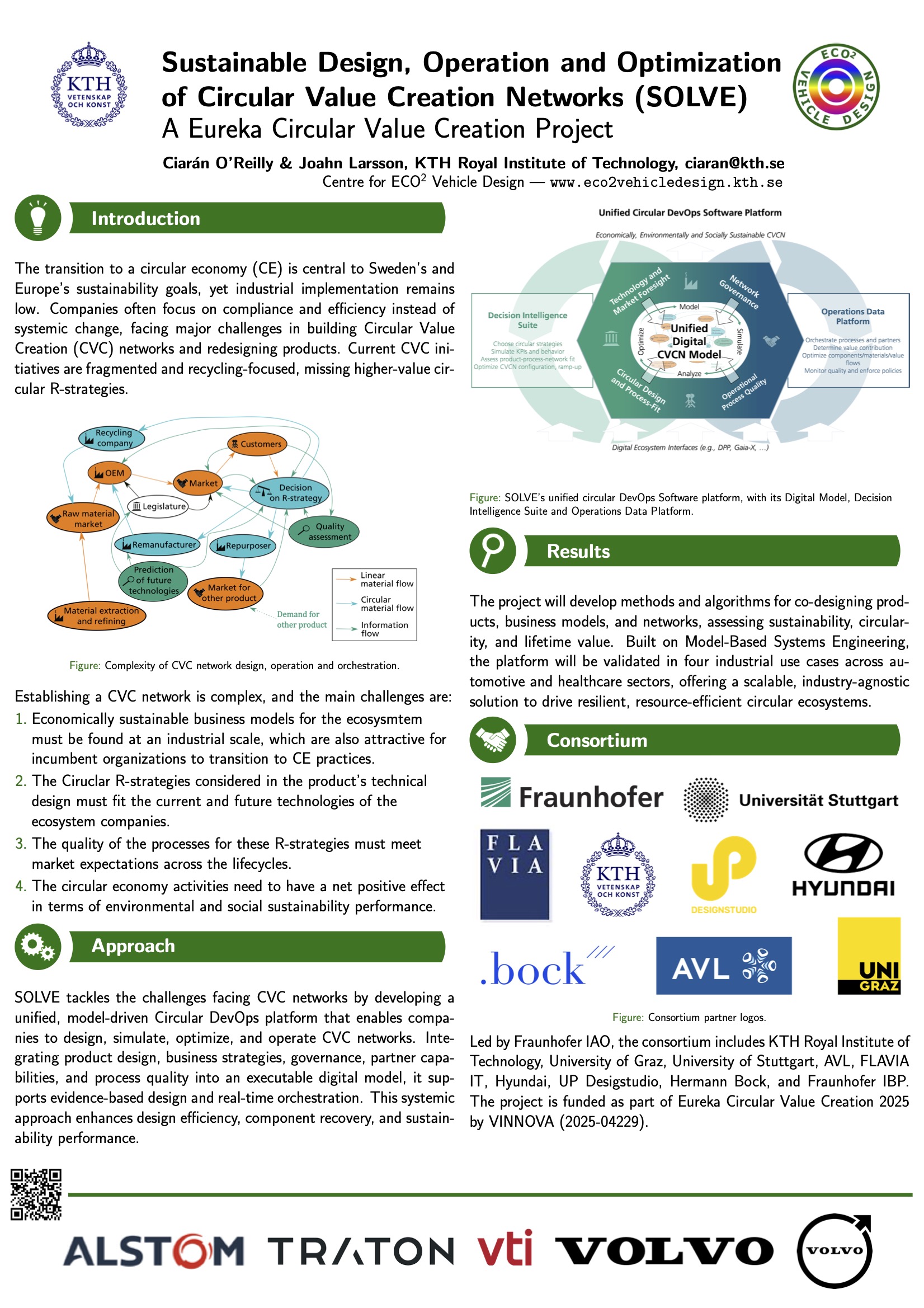
Sustainable Design, Operation and Optimization of Circular Value Creation Networks

Hyeon-Il Kim, Postdoc

This project tackles the challenges facing CVC networks by developing a unified, model-driven Circular DevOps platform that enables companies to design, simulate, optimize, and operate CVC networks. It supports evidence-based design and real-time orchestration. This systemic approach enhances design efficiency, component recovery, and sustainability performance. The project will develop methods and algorithms for co-designing products, business models, and networks, assessing sustainability, circularity, and lifetime value. Built on Model-Based Systems Engineering, the platform will offer a scalable, industry-agnostic solution to drive resilient, resource-efficient circular ecosystems.
bild

Non-linear modelling for target cascading of vehicle dynamics requirements

Henrik Hvitfelt, Industry Postdoc, Volvo Cars.

The automotive industry is under growing pressure to develop improved vehicles, while simultaneously reducing development time and cost. Meeting these demands require not only improved vehicle design, but also a more efficient development process. This project develops a nonlinear target cascading framework capable of propagating vehicle-level requirements on handling, steering, stability, and efficiency to subsystem design parameters. The framework will extend existing linear formulations by incorporating nonlinear effects such as nonlinear tyres and nonlinear suspension components and kinematics. The developed methods will be integrated into a toolchain capable of mapping feasible design regions for vehicle concepts in the concept phase. This enables engineers to evaluate trade-offs in vehicle design before detailed subsystem design is initiated. The methodology will be validated using simulation and vehicle measurements.

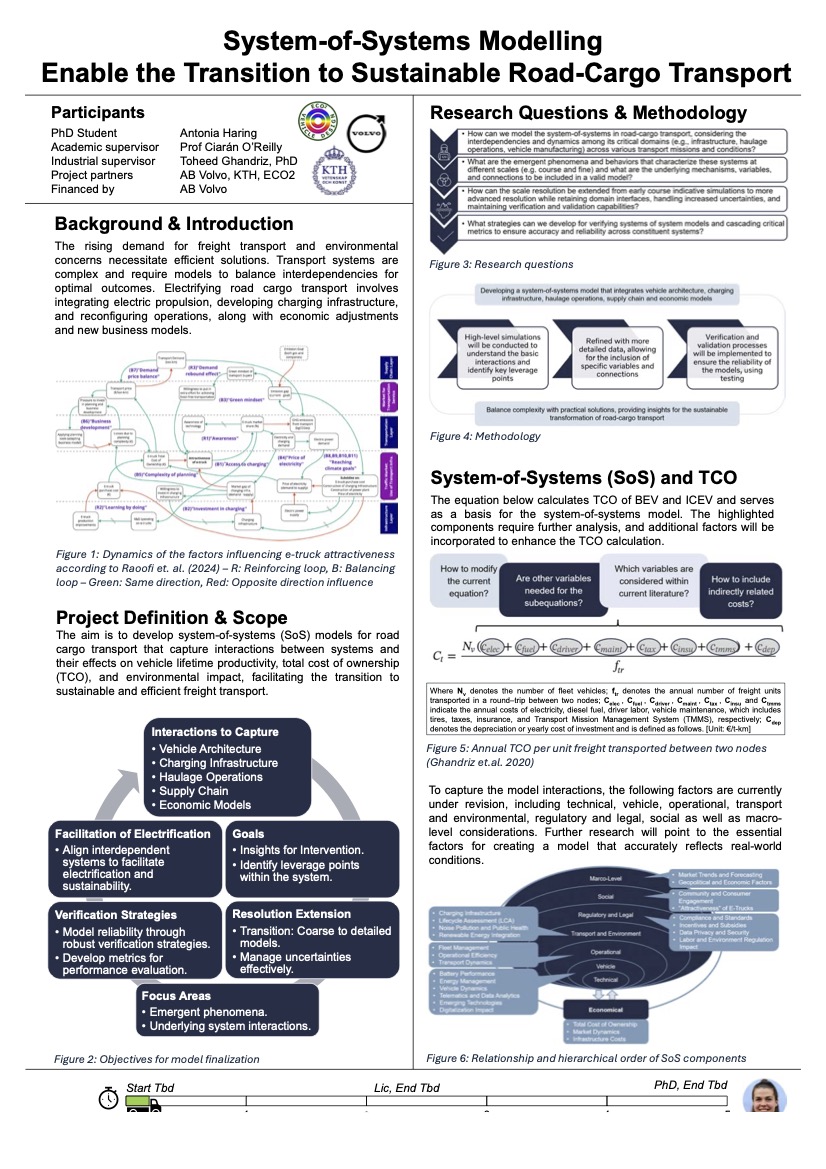
System-of-systems modelling for transition to sustainable freight transport

Antonia Haring, Industry Doctoral Student, Volvo Technologies

This project models the structure and dynamics of interdependencies in the wider transport system, initially on a high level, providing indications about the existence and stability of di]erent states, insights into where potential leverage points might exist to steer the transition favourably, and to feed into partitioning strategies and higher resolution models with the goal of optimising constituent systems.

poster

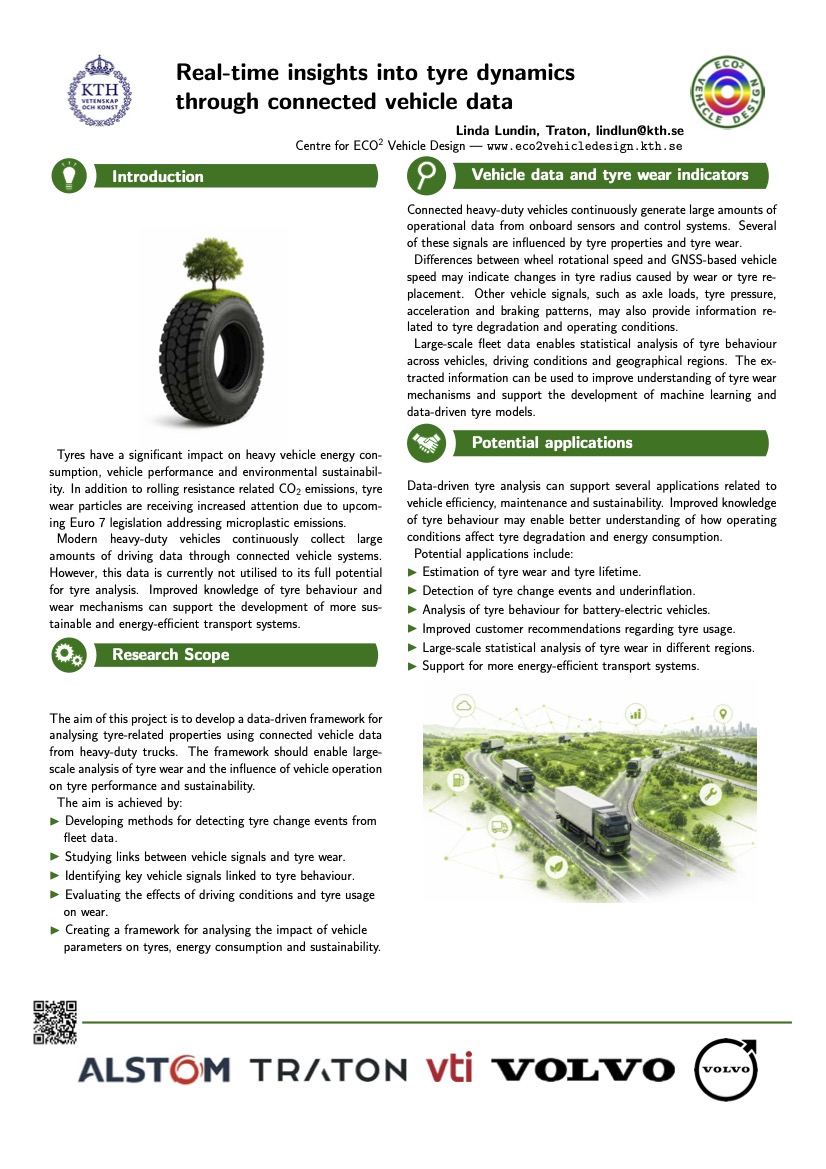
Real-time insights into tyre dynamics through connected vehicle data

Linda Lundin, Industry Doctoral Student, TRATON

This work combines principles from vehicle dynamics, tyre mechanics, and data science. Advanced statistical analysis and machine learning are applied to extract meaningful tyre information from parameters such as wheel speed, axle load, tyre pressure, tyre temperature, and ambient conditions. These insights are integrated with physical and data-driven models to create predictive algorithms capable of estimating tyre behaviour and condition in near real time across varying road and climate conditions.

poster

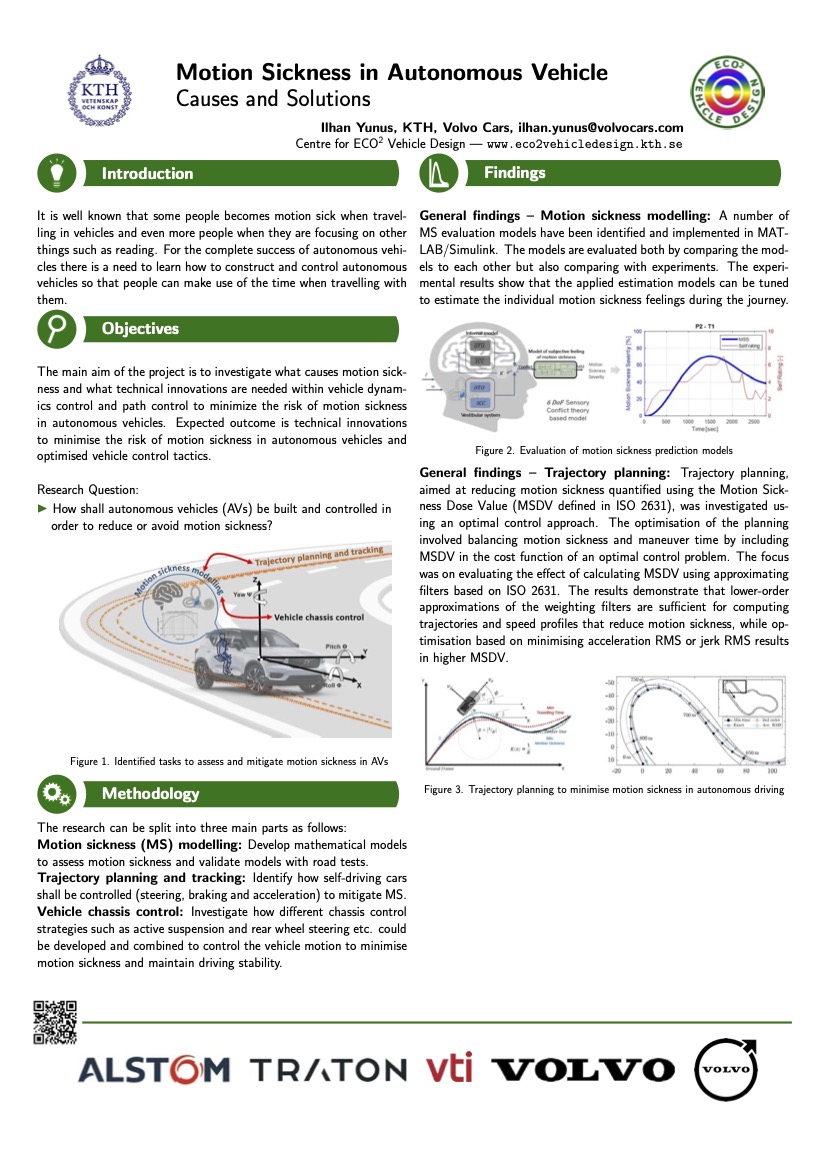
Autonomous driving motion sickness

Ilhan Yunus, Industry Doctoral Student, Volvo Cars

The research aims to review and apply various motion sickness prediction models, evaluating their ability to capture individual motion sickness feelings using measured data and subjective assessment ratings from field tests. The evaluated motion sickness prediction models will provide an opportunity to enhance the models further for more accurate predictions, which can be valuable for the development of autonomous vehicles.

poster

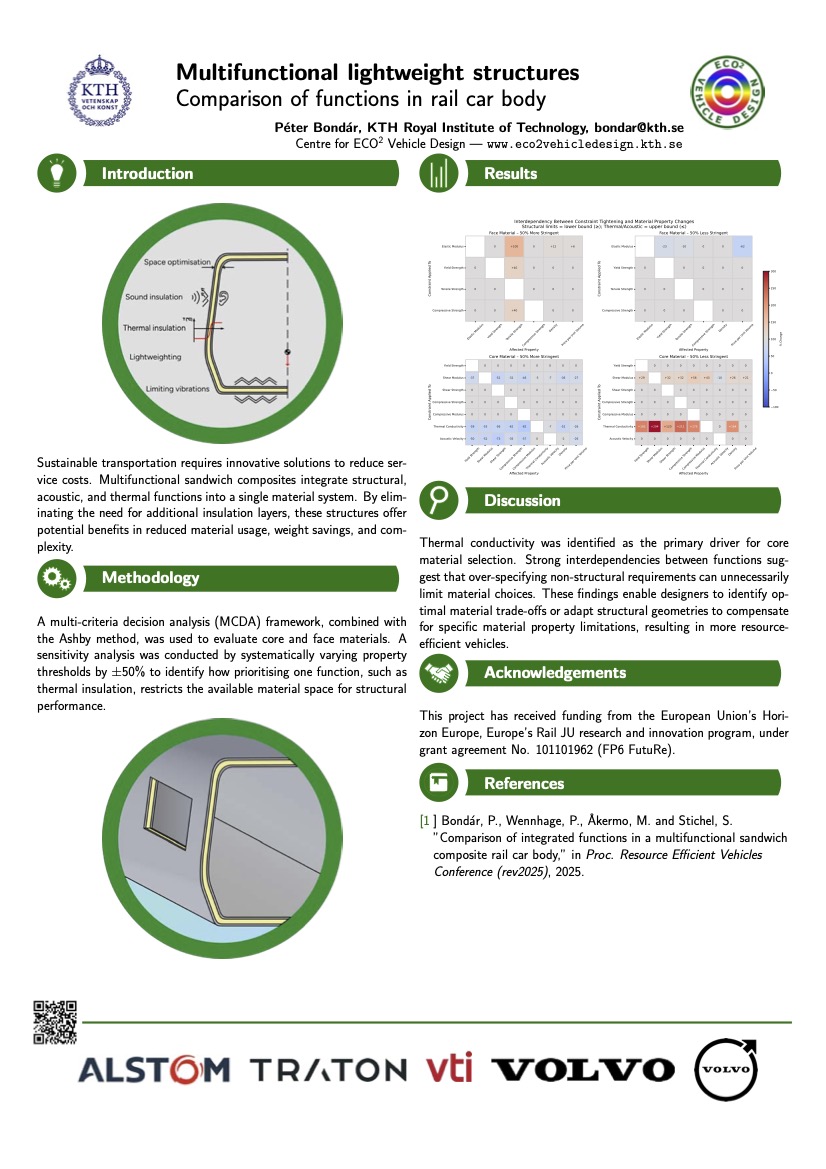
Cost modelling of composite components for rail vehicles

Péter Bondár, Doctoral Student

Revitalizing regional rail transportation requires innovative light-weight solutions. Multifunctional sandwich composite structures o]er the potential to integrate several functions served by various materials into one, optimizing the car body. The long-term cost-effectiveness and life-cycle benefits are evaluated during the re-search and contrasted with traditional metal structures.

poster

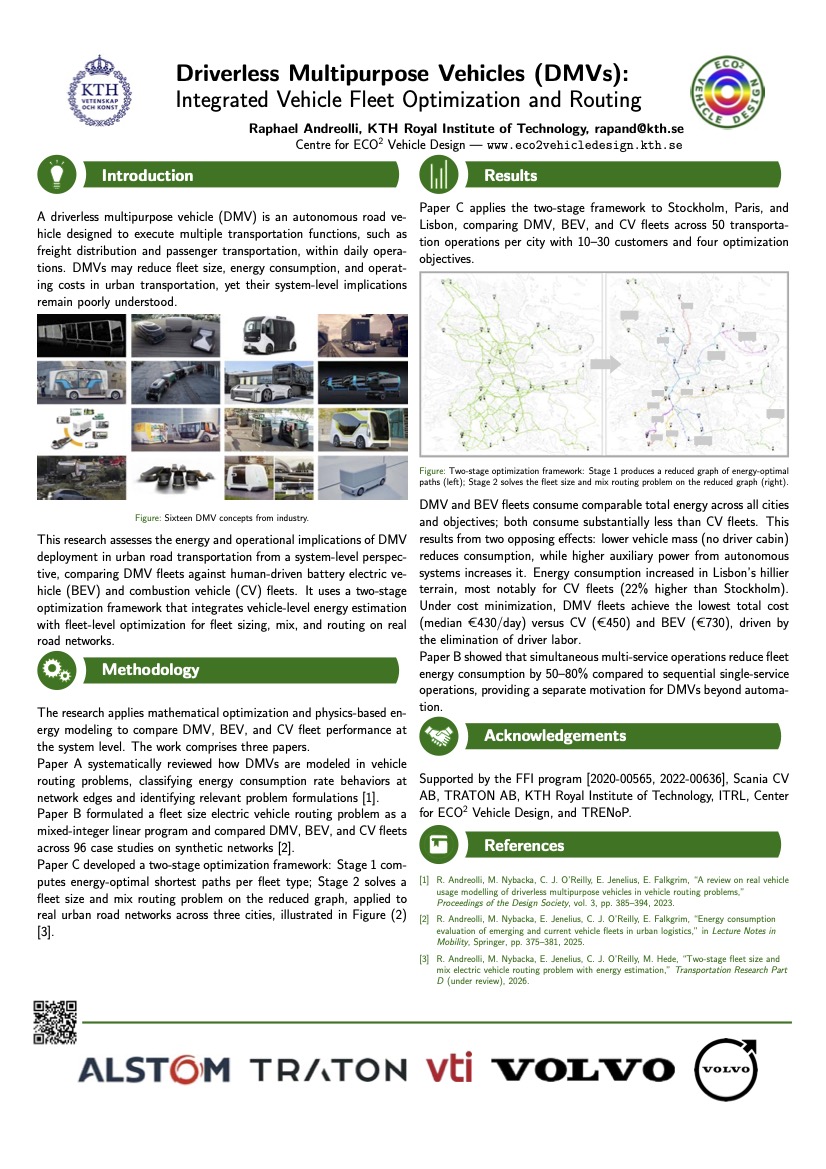
Optimal vehicle design for sustainable services

Raphael Andreolli, Doctoral Student

This project studies the impact of Driver Multipurpose Vehicles (DMVs) on efficiency and sustainability in the urban road transportation system. The purpose is also to develop a multi-scalar optimization framework with integrated vehicle fleet optimization and routing of DMVs for sustainable urban road transportation. This framework considers both the vehicle-level and the transportation system-level simultaneously and can be used both for academic and industrial purposes.

poster

Modelling of exterior acoustics with computationally eVicient FEM models

Pierre Mariotti, Doctoral Student

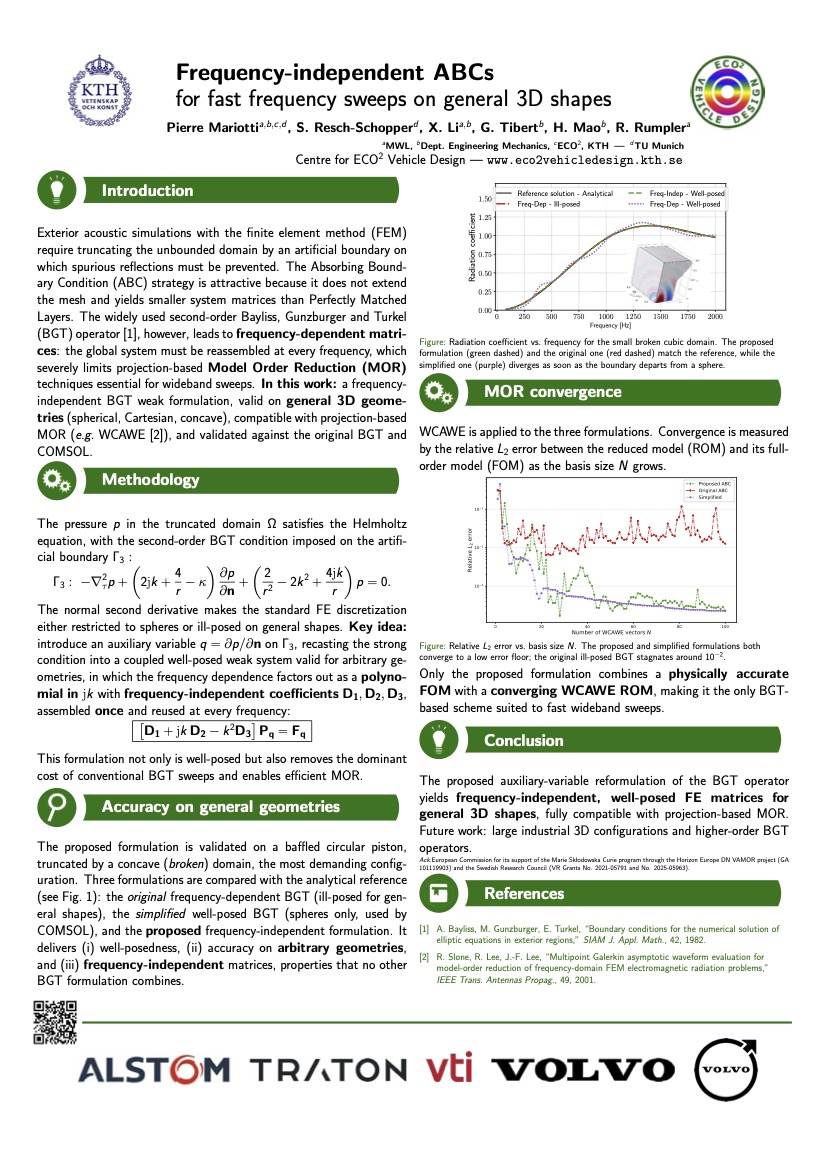
The research develops novel model order reduction (MOR) techniques for efficient finite element simulation of acoustic radiation from complex vibro-acoustic systems. The work focuses on overcoming space and frequency dependencies in perfectly matched layer (PML) formulations, enabling accurate and computationally efficient modelling of exterior noise radiation from vehicles and establishing best practice rules for radiation MOR applications.

poster

Implementing circular practices in the vehicle industry

Johan Larsson, Post-Doc Researcher

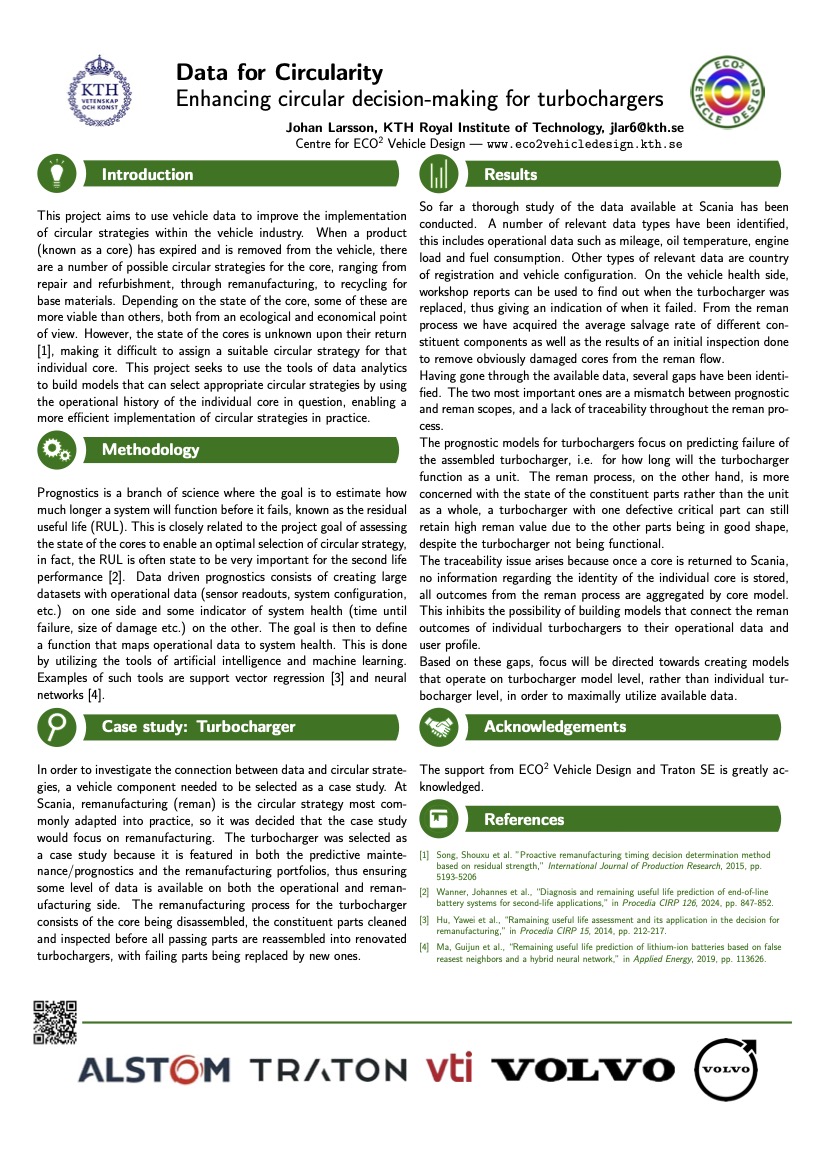
There is a large potential to improve the circular use of embodied resources in vehicle products and at the same time significantly contribute to sustainable transport. This project looks at the utilisation of vehicle data to maximise circularity, and the optimisation of multi-lifecycle pathways. Specifically, it explores how the State-of-Health (SOH) and Residual Usual Life (RUL) of a component can be leveraged to inform more optimal decisions regarding what circular strategy to implement.

poster

Predicting and evaluating driveability and performance of zero emission heavy duty vehicles

Lukas Öhlund, Doctoral Student

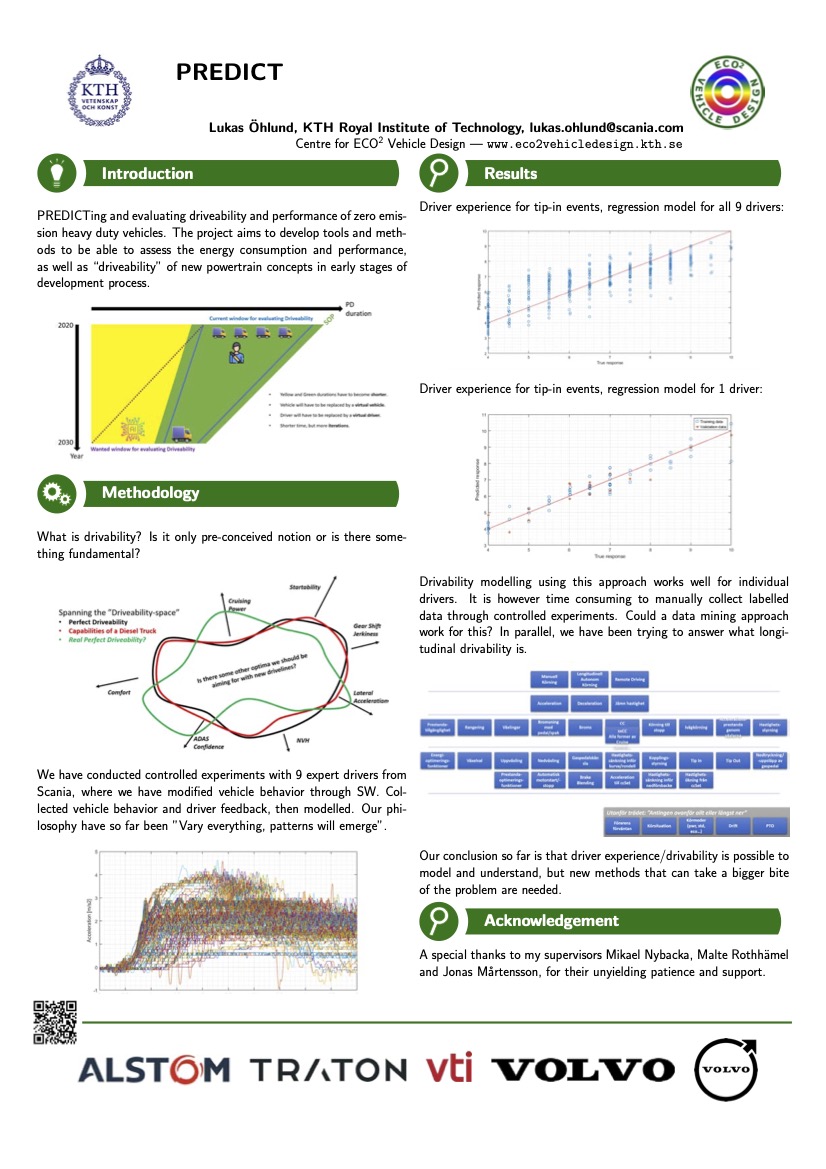
This project aims to develop tools and methods to be able to assess the energy consumption and performance, as well as driveability of new powertrain concepts in early stages of development process. Driveability and the understanding of how it is impacted is particularly important here since the needed longitudinal motion control for efficient driving is not always comfortable or natural behaviour to drivers or passengers. The tools and methods developed can be used by heavy vehicle manufacturers as well as institutes and companies using moving base driving simulators.

poster

Steer-by-wire interaction with systems and humans

Aniroodh Kumaraswamy, Doctoral Student

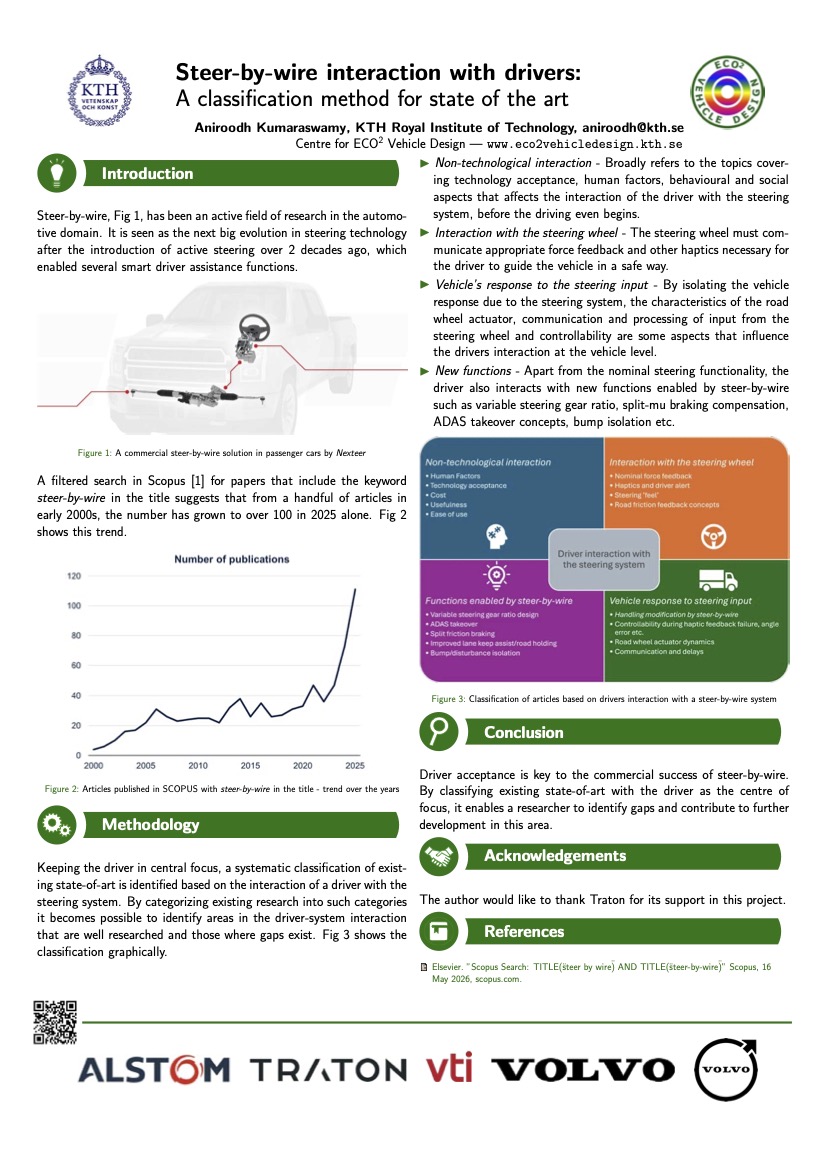
The project aims to develop methods for designing and assessing safety and driver experience of steer-by-wire (SbW) systems for trucks. It utilizes an iterative design process where truck driving simulators at KTH and VTI are used to study driving behaviour and experience, enabling the development of driver models and the definition of safety, driveability and experience metrics. Ultimately, the project defines how an optimal SbW system should mediate vehicle driving conditions and input from ADAS while it at the same time provides an e]icient input to steering actuators that make the driver in control of the vehicle motion.

poster

Wave propagation characterization of complex structures

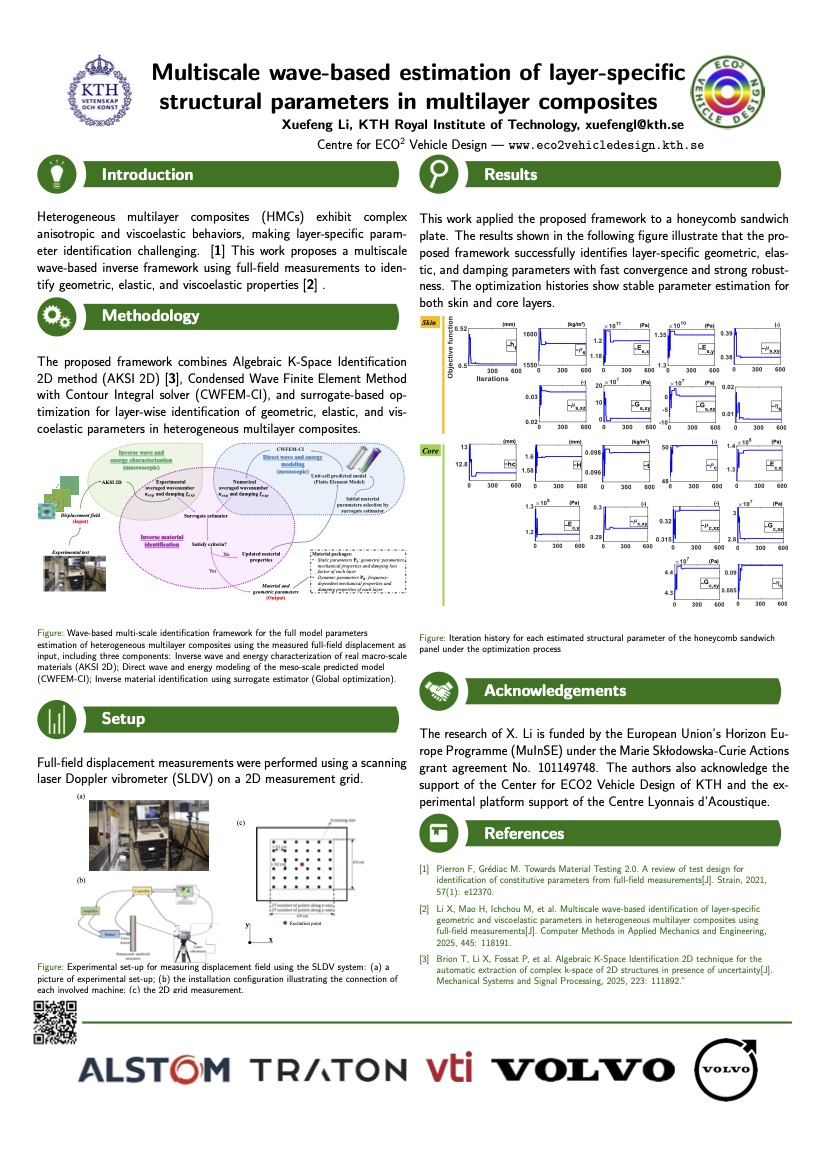
Xuefeng Li, Post-Doc Researcher

This work investigates the application of wave propagation characterization for complex composite structures through the Algebraic K-space Identification technique in the Cartesian coordinate system (AKSI-C). This provides a robust and low-cost framework for identifying wave propagation parameters of the structures with multidimensional signals for the first time.

poster

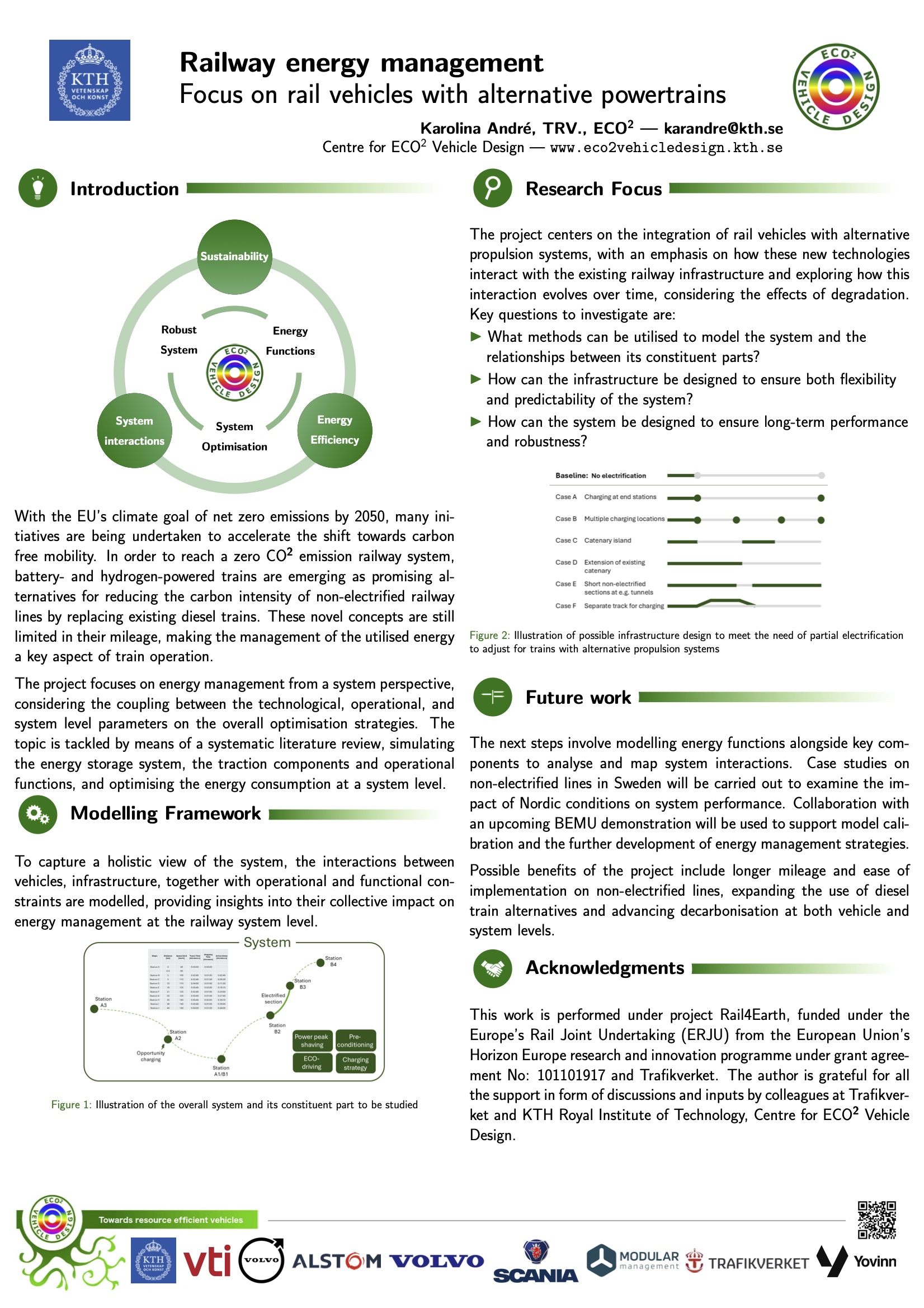
Energy management of alternative powertrains in rail vehicles

Sidharth Kapoor, Researcher

The integration of new powertrains and energy functions in railway systems requires research to understand the coupling between the technological, functional, operational, and system-level parameters. The research focusses on the energy management of railway systems with limited energy availability considering vehicle, infrastructure, and operational constraints.

poster

Previous projects:

Towards objective motion cueing tuning in driving simulators for vehicle dynamics evaluation

Henrik Hvitfeldt, 2026

Vehicle manufacturers face increasing pressure to reduce development time and costs while maintaining vehicle performance. Although computer-aided engineering has enabled a largely virtual development process, a key limitation remains: the integration of human subjective assessment. Ride and handling characteristics are inherently perceptual and still rely on physical testing, thus delaying feedback to later development stages. Moving-base driving simulators offer a way to introduce the human into the virtual loop and enable early subjective evaluation of vehicle models. However, their effectiveness depends ...

bild

Methods for analyzing complex and holistic interactions in early-stage design

Sai Kausik Abburu, 2025

The conventional approach to vehicle design is inherently restrictive in analysing complex interactions and the resulting knock-on effects. This often leads to disharmonious solutions and increased design iterations. To overcome this, the focus needs to shift to early-stage design where there is freedom to explore design alternatives. But, this phase typically has limited information about system behaviour, entailing the need for holistic multidisciplinary models and robust methods. However, the methods and models available often focus on single aspect in isolation, which necessitates the need for an integrated framework ...

thesis

Acoustic sensing for road traffic modelling and noise assessment

Siddharth Venkataraman, 2025

Road traffic noise is a major environmental pollutant with significant societal impact, warranting reliable exposure assessment. Beyond its health impact, noise also contains rich temporal features that can be exploited for analysis. The state-of-the-art CNOSSOS-EU framework requires detailed traffic data, but in cities with limited monitoring infrastructure this input is often unreliable, reducing assessment accuracy. The thesis addresses this gap by developing a methodology that exploits data from roadside noise sensors and expands their functionality to also serve as traffic sensors, providing ...

thesis

Modelling road traffic noise and human exposure: from simulation to application

Sacha Baclet, 2025

Noise pollution is a leading environmental risk, causing widespread annoyance, sleep disturbance and an increased burden of disease. In Europe alone, more than 100 million people are affected by noise pollution, especially in urban areas. Road traffic is, by far, the largest contributor to this urban noise exposure. Despite extensive regulatory efforts, including the EU's Environmental Noise Directive, current approaches to environmental noise assessment remain limited in their capacity to capture the true complexity of road traffic noise pollution and its impacts on exposed populations. In particular, prevailing methodologies often rely on static assessments, using time-averaged indicators ...

thesis

Rolling resistance at non-steady-state conditions - investigating the effect of tyre temperature

Lisa Ydrefors, 2024

Road transport accounts for nearly a fifth of the global greenhouse gas emissions. Despite significant reductions, achieved by e.g. the introduction of electric vehicles, more can be done. One way is to reduce the rolling resistance, which is one of the resistive forces acting on a moving vehicle. The overall goal of this work is to fill part of the knowledge gap regarding tyre rolling resistance to support the development of more energy efficient vehicles. Focus is on the influence of the operating conditions, with emphasis on tyre temperature and non-steady-state measurements. Today, rolling ...

thesis

Concurrent topology and sizing optimisation for multifunctional structural design

Johan Larsson, 2024

The need for resource efficient transport is increasing as environmental concerns are growing ever more important. One of the most important vehicle properties when it comes to fuel consumption is the mass of the vehicle, with heavier vehicles requiring more energy and therefore more fuel to operate. A key strategy when designing more efficient vehicles for transport is thus to make the vehicles as light as possible. During operation, different vehicles are have to fulfill a number of different requirements, such as protecting passengers and cargo from the elements, being safe in case of an ...

thesis

A Framework for Fatigue Analysis of Carbon Fiber Reinforced Polymer Structures

Sara Eliasson, 2023

Our society depends on functional road communication, and Heavy Duty Vehicles (HDVs) offer convenient and limitless possibilities of transport and services. However, HDVs account for a quarter of the European Union's CO2 road emissions. There is a substantial need to reduce the CO2 emissions of HDVs to ensure a low negative environmental impact. To reduce the CO2 emissions of HDVs, their energy usage must be reduced. One way to reduce energy usage is to improve the structural efficiency of the vehicle and use high-performance composite materials such as Carbon Fiber Reinforced Polymers (CFRP) ...

thesis

Modelling and experimental testing of truck tyre rolling resistance

Jukka Hyttinen, 2023

Truck transport offers a versatile way to ship goods in regional, long haulage and urban applications. However, the heavy truck sector accounts for 6 % of total greenhouse gas emissions in the European Union. Therefore, there is a need for a substantial reduction of these emissions to secure the sustainability of Earth for future generations. A key parameter to be considered is rolling resistance, which is the source of approximately half of truck energy consumption. This thesis aims to provide knowledge and insights about rolling resistance simulations and testing, as well as contribute to ...  

thesis

Noise emissions from sustainable transport: A multi-scale modeling approach

Johan Nygren, 2023

Noise emissions from transportation remain one of the greatest environmental issues of modern day. Inhabitants in urban environments are especially exposed, with almost 80 million people in the European Union exposed to noise levels exceeding the recommended limits set by the World Health Organization (WHO). The community engaged in the research field of environmental acoustics is in agreement: the exposure to road traffic noise must be reduced to the benefit of our health and well-being. While the health-related effects from exposure of traffic noise are problematic and of utmost importance to reduce ...

thesis

Life Cycle Energy Optimisation: A multidisciplinary engineering design optimisation framework for sustainable vehicle development

Hamza Bouchouireb, 2023

This thesis explores how the systemic-level environmental footprint of light-duty vehicles could be reduced through integrative design using the Life Cycle Energy Optimisation (LCEO) methodology. This methodology aims at finding a design solution that uses a minimum amount of cumulative energy demand over the different phases of the vehicle's life cycle; while complying with a set of functional constraints, thereby avoiding any sub-optimal energy demand shifts between the vehicle's different life cycle phases. This thesis further develops the LCEO methodology and expands its scope through ...

thesis

Micro-structural based acoustic modelling of anisotropic open cell materials

Eva Lundberg, 2022

A method for the calculation of the acoustic performance of open-cell foammaterials is discussed. From a known micro-structural geometry and theconstituent material, the relevant acoustic properties are computed using apreviously published analytical method for the calculation of the dynamicdrag impedance and a previously published method for the calculation of theelastic moduli. These have been combined and are here used to generate thenecessary inputs to a fully anisotropic state space formulation of a TransferMatrix Method (TMM) based solution where only geometry and materialproperties ...

thesis

Predicting the sound field from aeroacoustic sources on moving vehicles: Towards an improved urban environment

Nicolas Pignier, 2017

In a society where environmental noise is becoming a major health and economical concern, sound emissions are an increasingly critical design factor for vehicle manufacturers. With about a quarter of the European population living close to roads with heavy traffic, traffic noise in urban landscapes has to be addressed first. The current introduction of electric vehicles on the market and the need for sound systems to alert their presence is causing a shift in mentalities requiring engineering methods that will have to treat noise management problems from a broader perspective. That in which noise ...

thesis

Exploiting over-actuation to reduce tyre energy losses in vehicle manoeuvres

Mohammad Mehdi Davari, 2017

Due to environmental and economic challenges road vehicles need better solutions to reduce energy consumption. Improvement in tyre rolling efficiency is one of the key enablers for lower energy consumption. The shift towards electrification and intelligent driving creates new opportunities to develop energy-efficient vehicles. For instant over-actuated vehicles which enables different objectives such as safety, performance and energy efficiency to be fulfiled during a manoeuvre. The objective of this thesis is to develop a simulation environment to simulate the energy dissipated from the tyre ...

thesis

An experimental and numerical study of an automotive cooling module

Anders Rynell, 2017

Heavy vehicles are major emitters of noise. Especially at idle or low vehicle speeds a large portion of the noise emanates from the fan that forces the flow through the cooling module. The aim of this work is to investigate and reveal aerodynamic and acoustic installation effects linked to the cooling package. This introduces a multidisciplinary approach involving examination of the flow field, sound generation and sound propagation. The work includes two main parts: an experimental and a numerical part. The cooling module used throughout this work, named reduced cooling module, primarily ...

thesis

Processing of self-reinforced poly(ethylene terephthalate) composites for automotive applications

Lars Jerpdahl, 2017

The vehicles of the future must have less negative environmental impact during their use phase than the vehicles of today in order to avoid major climate change on earth. Consequently electric vehicles are currently under development with the purpose of reducing CO2 emissions when the vehicle is driven. There are also efforts put in to reducing the weight of vehicles in order to reduce the demand for energy to drive them. One important aspect of weight reduction is that new materials and technologies are developed. Plastic materials have low a density and can therefore be used to reduce the ...

thesis

On multilayered system dynamics and waves in anisotropic poroelastic media

Juan Pablo Parra Martinez, 2016

The mechanical and acoustic anisotropy of media is a governing factor in the behaviour of multilayered systems including such media. The understanding of the mechanisms conditioning the dynamic behaviour of multilayered systems is of paramount importance. In particular, the intrinsic anisotropy of poroelastic media presents a potential for the optimal design of systems for multifunctional performances. Indeed, these multilayered systems are bound by stiffness, thermal and acoustic performance constraints in simultaneously. A plane wave method is presented to study the influence ...

thesis

On the influence of surface roughness on rolling contact forces

Oskar Lundberg, 2016

Road vehicle tyres, railway wheels and ball bearings all generate rolling contact forces which are transferred within a finite area of contact between the rolling element and the substrate. Either it is visible or not for the human eye, a certain degree of roughness is always present on the contacting surfaces and it influences the generation of both vertical and lateral contactforces. The purpose of this investigation is to enhance the understanding and modelling of the influence from small-scale surface roughness on the generation of rolling contact forces. To this end, a computationally ...

thesis

Absorption of Sound: On the effects of field interaction on absorber performance

Anna Färm, 2016

Environmental noise has for decades been a well known problem, especially in urban areas. As noise requirements for vehicles are sharpened, noise reducing concepts are needed in early design stages requiring accurate simulations to support the design. Specifically for optimization of noise treatments, the absorber performance must be simulated correctly. So called noise encapsulations are placed below the powertrain on heavy vehicles to enclose the engine and reduce noise radiation. The attenuation of the absorbers on these shields must be represented correctly in simulations, even in ...

thesis

Modelling the viscoplastic properties of carbon black filled rubber: A finite strain material model suitable for Finite Element Analysis

Rickard Österlöf, 2016

An increased environmental awareness, legal demands and the large part of total costs attributable to fuel cost are all incentives for the automotive industry to reduce fuel consumption. The optimal driveline to enable this reduction depends on the operational conditions and the available infrastructure. Moreover, special care is needed when developing the driveline isolators, since the demands on noise, vibration and harshness (NVH) are the same regardless of driveline. To this end, computer aided calculations can be used in order to evaluate a large number of configurations ...

thesis

Assessing design strategies for improved life cycle environmental performance of vehicles

Sofia Poulikidou, 2016

Vehicle manufactures have adopted different strategies for improving the environmental performance of their fleet including lightweight design and alternative drivetrains such as EVs. Both strategies reduce energy during use but may result in a relative increase of the impact during other stages. To address this, a lifecycle approach is needed when vehicle design strategies are developed. The thesis explores the extent that such a lifecycle approach is adopted today and assesses the potential of these strategies to reduce the lifecycle impact of vehicles. Moreover it aims to contribute ...

thesis

Recyclable self-reinforced ductile fiber composite materials for structural applications

Christof Schneider, 2015

Lightweight structures in vehicles are a proven way to reduce fuel consumption and the environmental impact during the use. Lower structural weight can be achieved by using high performance materials such as composites or using the material efficiently as a sandwich structure. Traditional composite materials such as carbon or glass fiber reinforced polymers have high weight specific mechanical properties but are inherently brittle and expensive. They consist of at least two different materials making recycling a difficult endeavor.The best composite material would have good weight ...

thesis

On Rail Vehicle Dynamics in Unsteady Crosswind Conditions: Studies Related to Modelling, Model Validation and Active Suspension

Dirk Thomas, 2013

Crosswind stability of rail vehicles has been a research area for several decades, mainly motivated by vehicle overturning accidents and higher speeds, but in recent times also by issues of lower energy consumption and track maintenance costs demanding lower vehicle weights. During everyday operation, rail vehicles are subjected to substantial lateral influences from track curves, track irregularities and crosswind, leading to large suspension deflections and increased crosswind sensitivity. Unsteady crosswind like gusts also calls for attention. Simulations of possible vehicle overturning are necessary ...

thesis

Multi-Functional Composite Design Concepts for Rail Vehicle Car Bodies

David Wennberg, 2013

Structures and material combinations, tailored for multiple purposes, are within the reach of vehicle manufacturers. Besides reducing the environmental impact of the transportation sector these multi-functional structures can reduce costs, such as development, manufacturing and maintenance, and at the same time offer improved comfort to the passengers. This thesis sets out to develop multi-functional design algorithms and evaluate concepts for future composite high speed train car bodies with the objective of optimising the amount of mass needed to fulfil all functions of the structure ...

thesis

Sound transmission properties of honeycomb panels and double-walled structures

Sathish Kumar Ramanathan, 2012

Sandwich panels with aluminium face sheets and honeycomb core material have certain advantages over panels made of wood. Some of the advantages of these constructions are low weight, good moisture properties, fire resistance and high stiffness to-weight ratio etc. As product development is carried out in a fast pace today, there is a strong need for validated prediction tools to assist during early design stages. In this thesis, tools are developed for predicting the sound transmission through honeycomb panels, typical for inner floors in trains and later through double-walled structures ...

thesis

Modelling tools for quieter vehicles: Waves in poro– and visco–elastic continua

Martin Östberg, 2012

New modelling tools intended to contribute to the development of components for quieter vehicles are developed. The tools are based on continuum models for wave propagation in poro– and visco–elastic media. By using geometric attributes of the studied components, the computational cost may be radically decreased compared to traditional methods. By assigning known analytical functions for one or two of the spatial directions, the spatial dimension of the remaining numerical problem is reduced. This reduction of spatial dimensions is performed in two different ways. The first one treats wave ...

thesis

A study of tailoring acoustic porous material properties when designing lightweight multilayered vehicle panels

Eleonora Lind Nordgren, 2012

The present work explores the possibilities of adapting poro-elastic lightweight acoustic materials to specific applications. More explicitly, a design approach is presented where finite element based numerical simulations are combined with optimization techniques to improve the dynamic and acoustic properties of lightweight multilayered panels containing poro-elastic acoustic materials. The numerical models are based on Biot theory which uses equivalent fluid/solid models with macroscopic space averaged material properties to describe the physical behaviour of poro-elastic materials. To ...

thesis

Design of Multifunctional Body Panels for Conflicting Structural and Acoustic Requirements in Automotive Applications

Christopher John Cameron, 2011

Over the past century, the automobile has become an integral part of society, with vast increases in safety, refinement, and complexity, but most unfortunately in mass. The trend of increasing mass cannot be maintained in the face of increasingly stringent regulations on fuel consumption and emissions. The body of work within this thesis exists to help the vehicle industry to take a step forward in producing vehicles for the future in a sustainable manner in terms of both economic and ecological costs. In particular, the fundamentally conflicting requirements of low weight and high ...

thesis

Aerodynamics simulations of ground vehicles in unsteady crosswind

Tristan Favre, 2011

Ground vehicles, both on roads or on rail, are sensitive to crosswinds and the handling, travelling speeds or in some cases, safety can be affected. Full modelling of the crosswind stability of a vehicle is a demanding task as the nature of the disturbance, the wind gust, is complex and the aerodynamics, vehicle dynamics and driver reactions interact with each other. One of the objectives of this thesis, is to assess the aerodynamic response of simplified ground vehicles under sudden strong crosswind disturbances by using an advanced turbulence model. In the aerodynamic simulations ...

thesis

Suspension design for off-road construction machines

Adam Rehnberg, 2011

Construction machines, also referred to as engineering vehicles or earth movers, are used in a variety of tasks related to infrastructure development and material handling. While modern construction machines represent a high level of sophistication in several areas, their suspension systems are generally rudimentary or even nonexistent. This leads to unacceptably high vibration levels for the operator, particularly when considering front loaders and dump trucks, which regularly traverse longer distances at reasonably high velocities. To meet future demands on operator comfort and high speed ...

thesis
Page responsible:Ciarán O'Reilly
Belongs to: ECO2 Vehicle Design
Last changed: Aug 31, 2026